How to Build an Emergency Fund You Can Keep Adding To
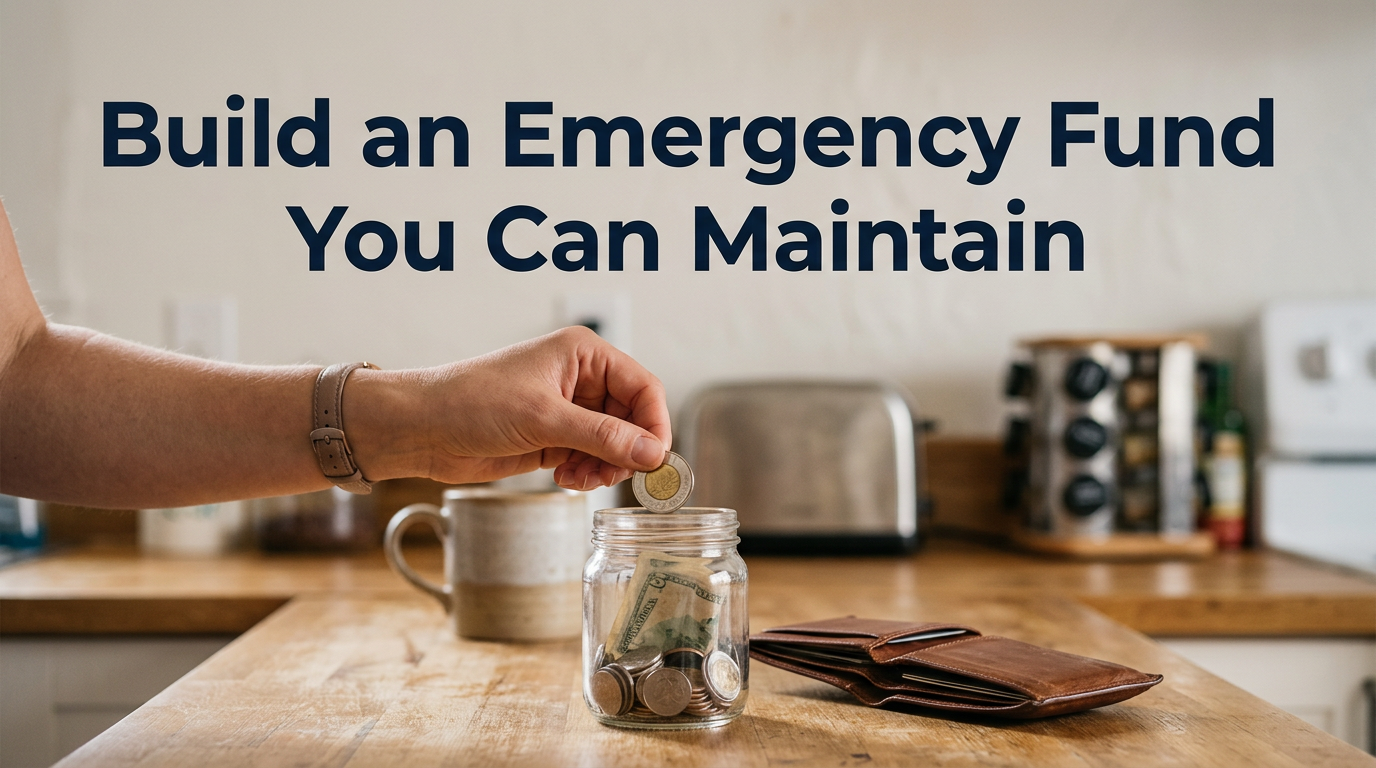
An unexpected bill rarely arrives when there is extra money waiting for it. If saving a large amount feels out of reach, that does not mean you have to wait to begin.
The first goal is a fund you can start and maintain, not a perfect balance. To work out how to build an emergency fund, choose one necessary expense you would want help covering, set an affordable first target, and give the money a separate, accessible place to grow. Then decide what you can contribute without making ordinary bills harder to pay.
1. Decide what your emergency fund needs to cover
An emergency fund is money set aside for an unplanned necessary expense or an interruption in income. Before choosing a savings number, picture the situations in which you would actually use it.
Start by writing down two or three possibilities. For each one, ask:
Is it unexpected? You did not know when, or whether, you would need to pay for it.
Is it necessary? Leaving it unpaid would interfere with an essential part of daily life.
Could it need attention soon? Waiting several weeks to move money into place would be a problem.
These questions also help separate emergencies from expenses you can see coming. A bill that arrives every year may be awkward to pay, but it is still a planned expense. Keeping that distinction in mind protects the fund’s purpose: it is there for surprises, not for every cost that feels inconvenient.
2. Choose a first target, not a final answer
A large savings goal can be sensible in the abstract and still be a poor place to start. If the number makes the first contribution feel impossible, choose a smaller milestone that would make a real difference.
Look at the necessary expenses you just named. You may know roughly what one could cost, or you may not. Either way, ask what amount you could begin building toward while keeping up with current essentials. That amount is your first target. It is a milestone you can revisit, not a claim that every possible emergency will fit inside it.
Decision rule: Choose a target that would help with a specific unexpected need and allows you to make a contribution you can reasonably repeat. If one side of that test fails, adjust the target or the pace.
Write your choice in plain language: “My first target is $___ to help cover ___.” Naming its purpose makes the number easier to assess later. If your expenses change, the target can change too.
3. Keep the money separate, but within reach
A fund for urgent needs should be easy to identify and reasonably accessible when you need it. Keeping it apart from the money you use for everyday spending can help you see what is available for emergencies instead of treating it as part of your usual balance.
A separate savings account is one possible place. If you already have an account you can use for this purpose, that may be enough to begin. You do not need a complicated setup to make the distinction useful.
Before choosing where to keep the fund, check the practical details that matter to you:
Access: How would you get the money when an expense cannot wait? Check the steps and timing rather than assuming it will be available immediately.
Separation: Can you tell at a glance how much is reserved for emergencies?
Account conditions: Are there fees, minimum-balance requirements, or transfer rules that would make the account awkward for the amount you plan to save?
The right place is not simply the one that feels hardest to touch. Making emergency money difficult to access can work against its purpose. Aim for a clear boundary from routine spending without creating an obstacle when you genuinely need the funds.
4. Pick a contribution your regular budget can carry
Now choose how money will enter the fund. A useful contribution is not necessarily the biggest amount you can manage once. It is an amount that still makes sense alongside your regular expenses.
Start with what is left after the costs you need to meet. If that amount varies, choose a modest contribution you could make in an ordinary week or pay period, rather than basing the plan on an unusually good one. You can add more when it genuinely fits, without making the extra amount your new obligation.
There are two straightforward ways to put the plan into practice:
Set a recurring transfer if your income and expenses are predictable enough for it. Choose an amount and date that leave room for upcoming bills, then check that the transfer has worked as intended.
Make a regular manual check-in if a fixed transfer could put pressure on your balance. At a chosen point in each pay period, decide what you can move after accounting for essentials.
Neither method is a test of commitment. The better choice is the one you can use without repeatedly needing to move the money back for expected expenses. If a contribution causes that pattern, make it smaller or change its timing.
What a small plan looks like in practice
Example: Imagine someone chooses a $150 first target and can set aside $10 each week. If nothing changes, they would reach that milestone after 15 contributions. Their plan is specific: the target has a purpose, the weekly amount fits their current cash flow, and the money goes into a separate, accessible place.
Now suppose an unexpected necessary $70 expense comes up after nine contributions. They have $90 saved, so using $70 leaves $20. The fund has done its job even though it never reached the first target.
Their next decision is not whether they have “failed” at saving. It is whether $10 a week still fits. If it does, another 13 contributions would bring the balance back to $150, assuming no other withdrawals. If their circumstances have changed, they can choose a smaller contribution and a slower return to the target.
5. Set a rule for using the fund—and starting again
Deciding when to use emergency savings can be harder than setting it aside. Some people hesitate because they want to preserve the balance; others find that an available balance is easy to spend. A rule made in advance gives you a way to judge the expense without treating the fund as untouchable or available for anything.
Use-and-replenish rule: Use the fund for an unexpected, necessary expense or income gap you intended it to cover. After a withdrawal, note the new balance and choose your next manageable contribution toward the target.
Judgment: The rule still leaves room for judgment. An expense does not have to match an example you wrote months ago to be necessary. Ask whether it serves the same purpose. Equally, a purchase does not become an emergency only because you would prefer to make it today.
Review: When you use the fund, record what happened in a sentence or two. Was the cost within the range you had imagined? Was the money accessible when you needed it? Did the withdrawal reveal a type of expense your original list missed? Those answers can help you adjust the target or where you keep the money.
Replenishing: Replenishing need not happen all at once. If the contribution you used before still fits, resume it. If it does not, choose a new amount rather than postponing the plan until you can replace the entire withdrawal.
Check that your plan can survive an ordinary month
Before you start, read your choices together. A target, storage place, and contribution amount can each sound reasonable on their own but fail to work as a combination.
Use this short check to make the plan practical:
I can name at least one unexpected, necessary expense the fund is meant to help cover.
My first target is useful without pretending to cover every possibility.
I know where the money will go and how I could access it.
My contribution leaves room for regular bills.
I know when I will review the amount, especially if income or expenses change.
I have a rule for using the fund and returning to the target afterward.
Frequently Asked Questions About Building an Emergency Fund
Should I wait until I can save a large amount?
No. If an affordable contribution is available now, you can begin with a first target that is smaller than your eventual goal. The early balance may not cover every expense, but it can still help with some surprises. Choose an amount you can sustain, then reconsider the target as the fund grows and your circumstances change.
What if my income changes from week to week?
Use a contribution plan that allows for variation. You might check what you can set aside after each pay period instead of committing to the same automatic transfer every time. Keep the first target in view, but do not assume every week must move you toward it at the same speed. Review the plan if your income pattern changes.
How do I know whether an expense counts as an emergency?
Ask whether it is unexpected, necessary, and within the purpose you set for the fund. An urgent repair you need for daily life may qualify; a cost you knew was coming generally calls for a different plan. If the situation is less clear-cut, return to the reason you created the fund rather than judging by the size of the bill alone.
What if I have to use the fund before reaching my first target?
Use it if the expense meets your rule. The first target is a milestone, not a condition you must meet before the money becomes useful. Afterward, check the remaining balance and decide what contribution fits now. You can return to the original target gradually, or revise it if the experience showed that a different amount would be more useful.
When should I change my savings target?
Revisit it when your necessary expenses or responsibilities change, or after using the fund reveals a gap in your original plan. You can also reconsider it once you reach your first milestone. Ask what expense or income interruption you want the next amount to help with, then choose a new target and contribution pace that fit your current finances.
An emergency fund does not have to begin with a large deposit. It begins with a purpose, a first milestone, and a contribution you can make room for—and a plan to return to when life interrupts it.
Choose your first savings target and set aside an amount that works for you.